

Why Do So Many Renovated Homes Still Feel Busy?
For many homeowners, renovation is viewed as an opportunity to maximise every available inch of space. Custom carpentry stretches from floor to ceiling, feature walls become focal points, and storage is introduced wherever possible.
Yet more is not always better.
Some of the most comfortable homes are not the ones filled with the most elements, but the ones where every decision feels deliberate.
This 1,292 sqft 5-room HDB in Punggol Way offers an alternative perspective. Designed by D&I Design Interior, the project explores how thoughtful planning, visual restraint and carefully considered detailing can create a home that feels calm, spacious and enduring.
Rather than relying on dramatic gestures, the design focuses on something less obvious but arguably more important, how the space feels to live in every day.
“The challenge was not how much we could introduce into the space, but how much we could simplify without compromising the way the home functions. The sense of calm comes from those decisions.”
— D&I Design Interior
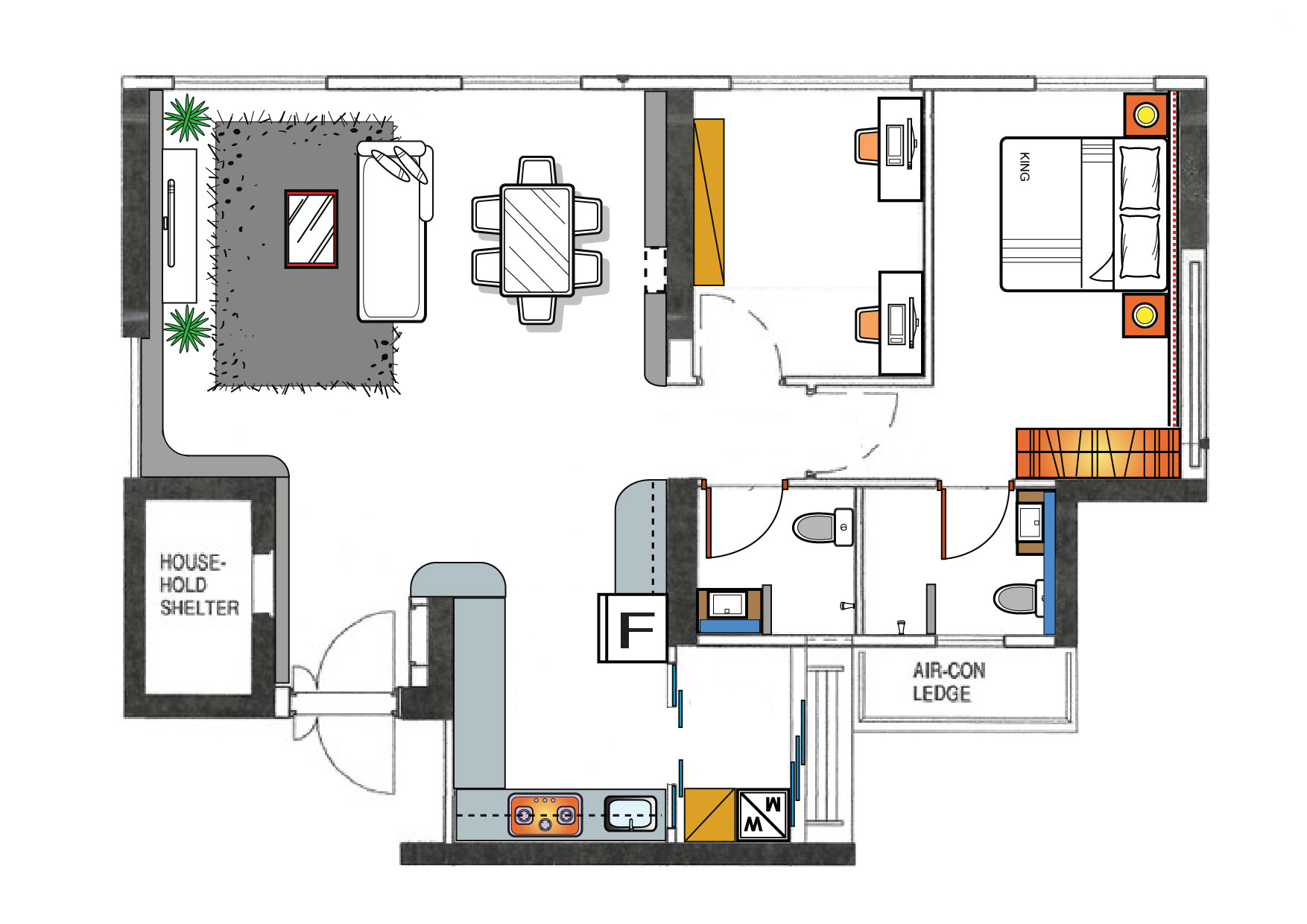
Project Snapshot
Project: Punggol Way
Property Type: 5-Room HDB
Size: 1,292 sqft
Design Style: Minimalist Contemporary
Renovation Budget: Approximately $90,000
Interior Designer: D&I Design Interior
Designing Space Rather Than Filling It
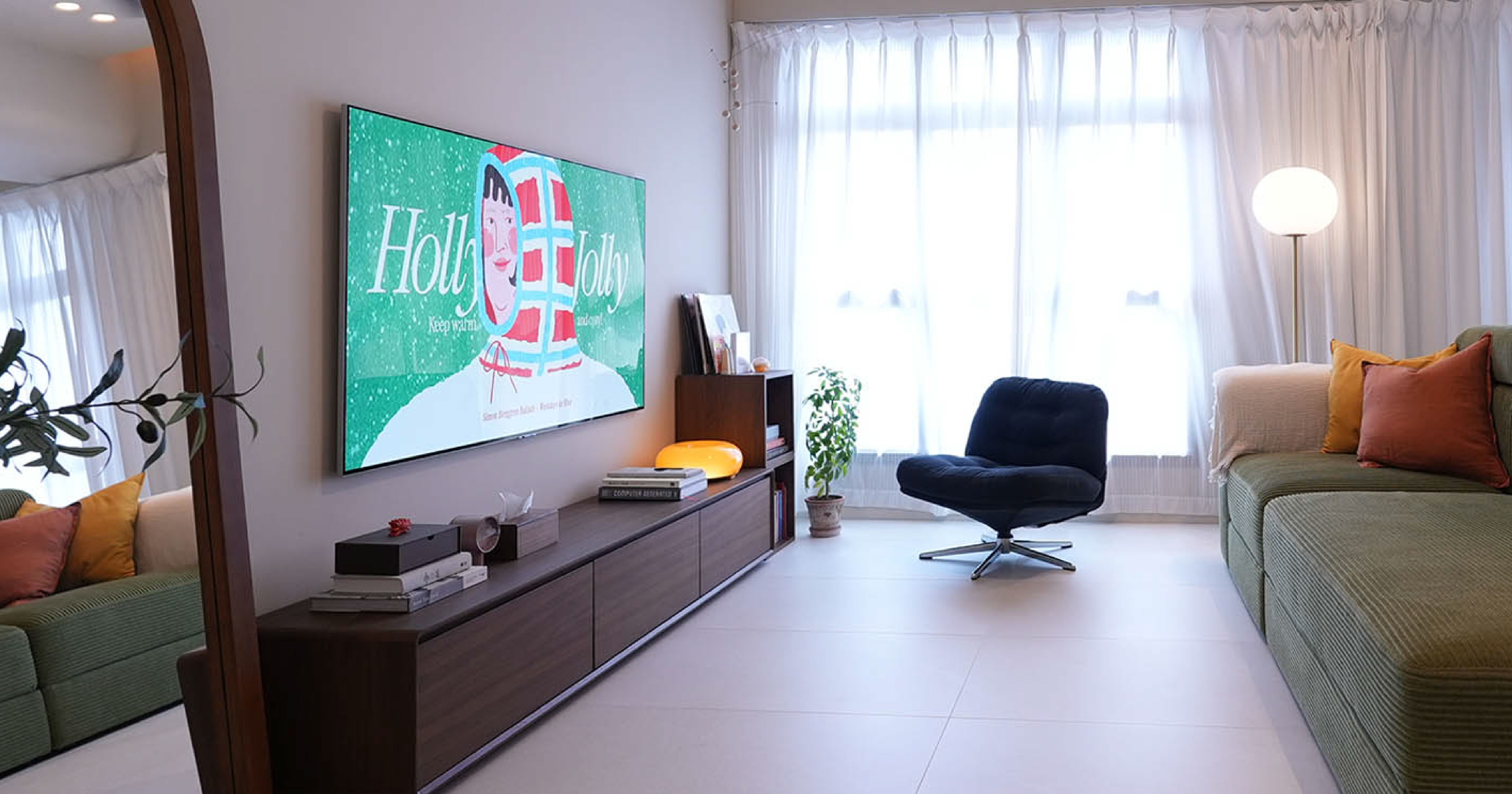
The first thing that stands out is not a feature wall or a statement material, but the amount of breathing room within the communal spaces.
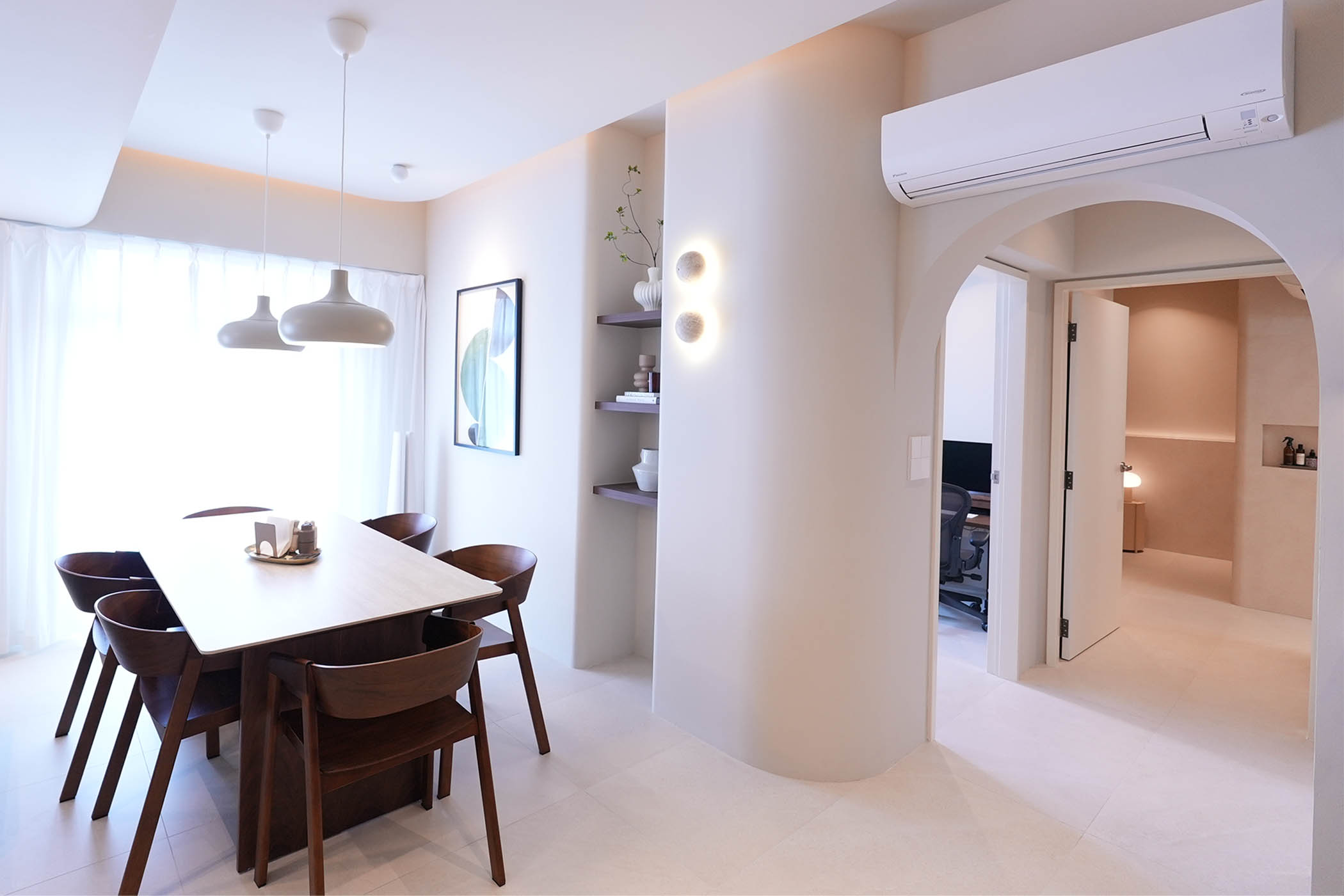
From the dining area, sight lines extend comfortably across the living room and towards the windows, allowing daylight to travel deep into the home. Rather than breaking the layout into heavily defined zones, D&I has allowed the various functions to coexist within a shared visual landscape.
The result is not simply a home that appears larger. It feels less compressed in daily use, with clear circulation paths and enough room for each area to function without competing for space.
What emerges is a sense of generosity that cannot be measured purely in square footage.
The space feels composed, uncluttered and easy to move through, qualities that often matter more in daily life than the dimensions shown on a floor plan.
Softening the Everyday
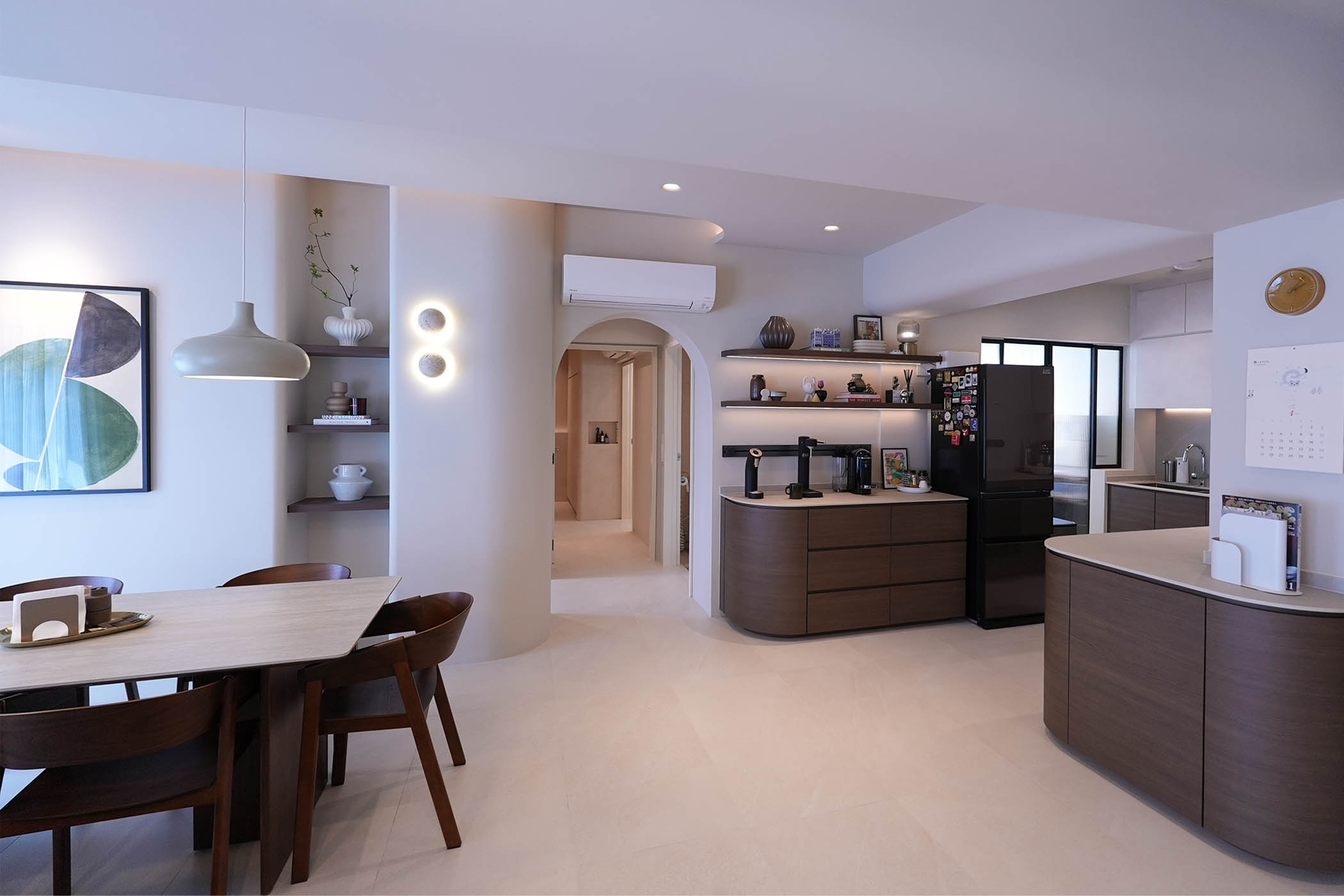
One of the most memorable details within the home is the curved low-height cabinetry positioned between the dining and kitchen zones. Rather than acting as a divider, it subtly mediates the relationship between the two spaces, introducing softness without interrupting openness.
Similar gestures appear throughout the project. The arched opening connecting adjacent spaces, rounded wall details and gentle ceiling transitions contribute to a design language that feels consistent rather than repetitive.
The effect is less about making a statement and more about shaping experience.
Moving through the home feels natural, with each space flowing into the next without abrupt interruption. Hard corners and rigid transitions are softened, creating an atmosphere that feels welcoming rather than formal.
It is a subtle intervention, but one that becomes increasingly noticeable the longer one spends in the space.
The Confidence of Restraint
Many contemporary homes rely on bold materials and highly customised features to establish identity.
This project takes a quieter route.
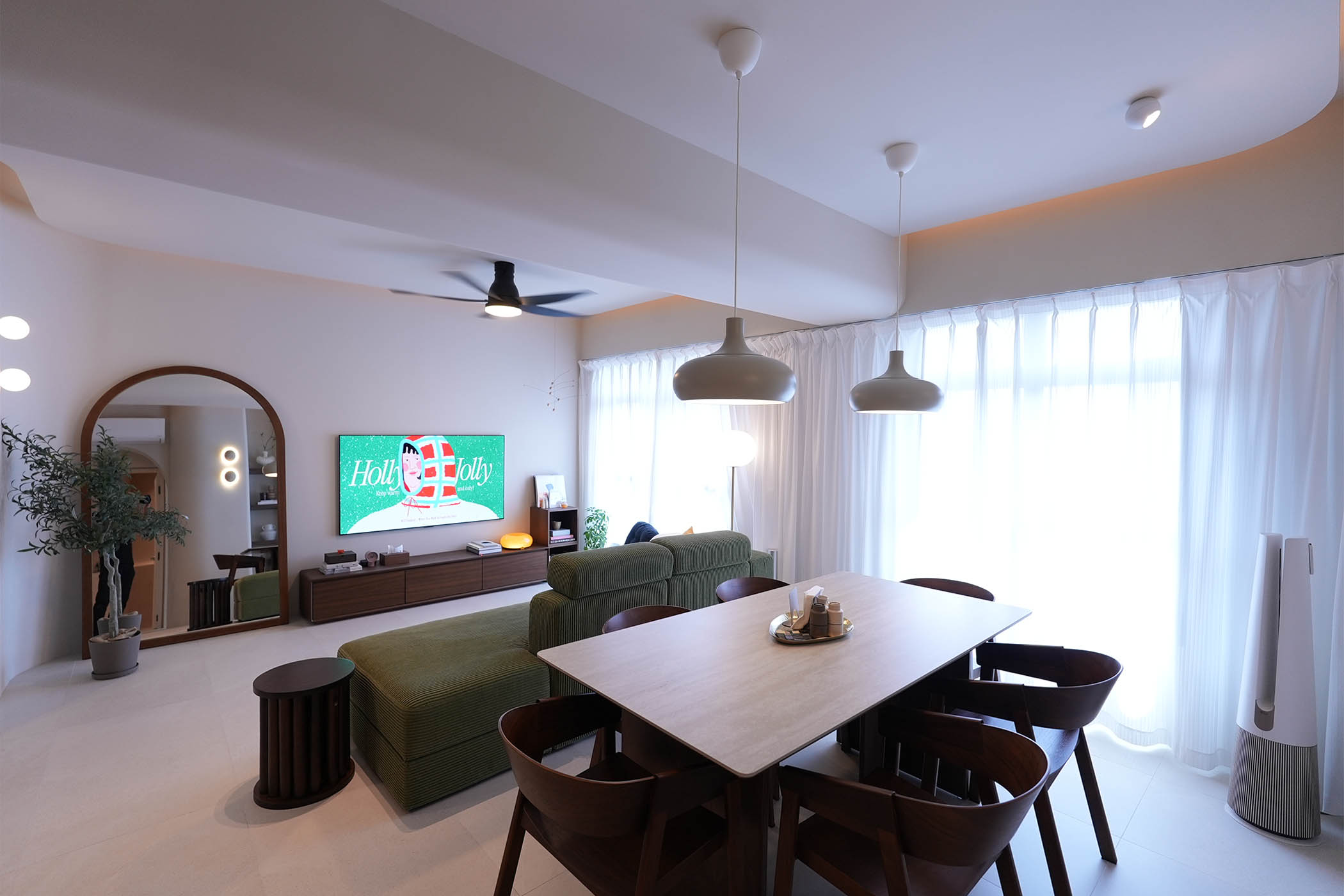
Warm timber tones, soft neutral finishes and carefully layered lighting form the foundation of the design language. The palette remains disciplined throughout the home, allowing individual elements to complement rather than compete with one another.
The dining area demonstrates this particularly well. Sculptural lighting and dark timber furniture create visual interest without overwhelming the space. In the kitchen, rounded cabinetry details and integrated storage maintain visual clarity while supporting everyday functionality.
There is a clear sense that each element has earned its place.
Nothing feels excessive. Nothing feels introduced purely for effect.
That restraint gives the home a sense of maturity that many renovations struggle to achieve.
When Planning Creates Atmosphere
What makes this project memorable is that its atmosphere is not created through styling alone.
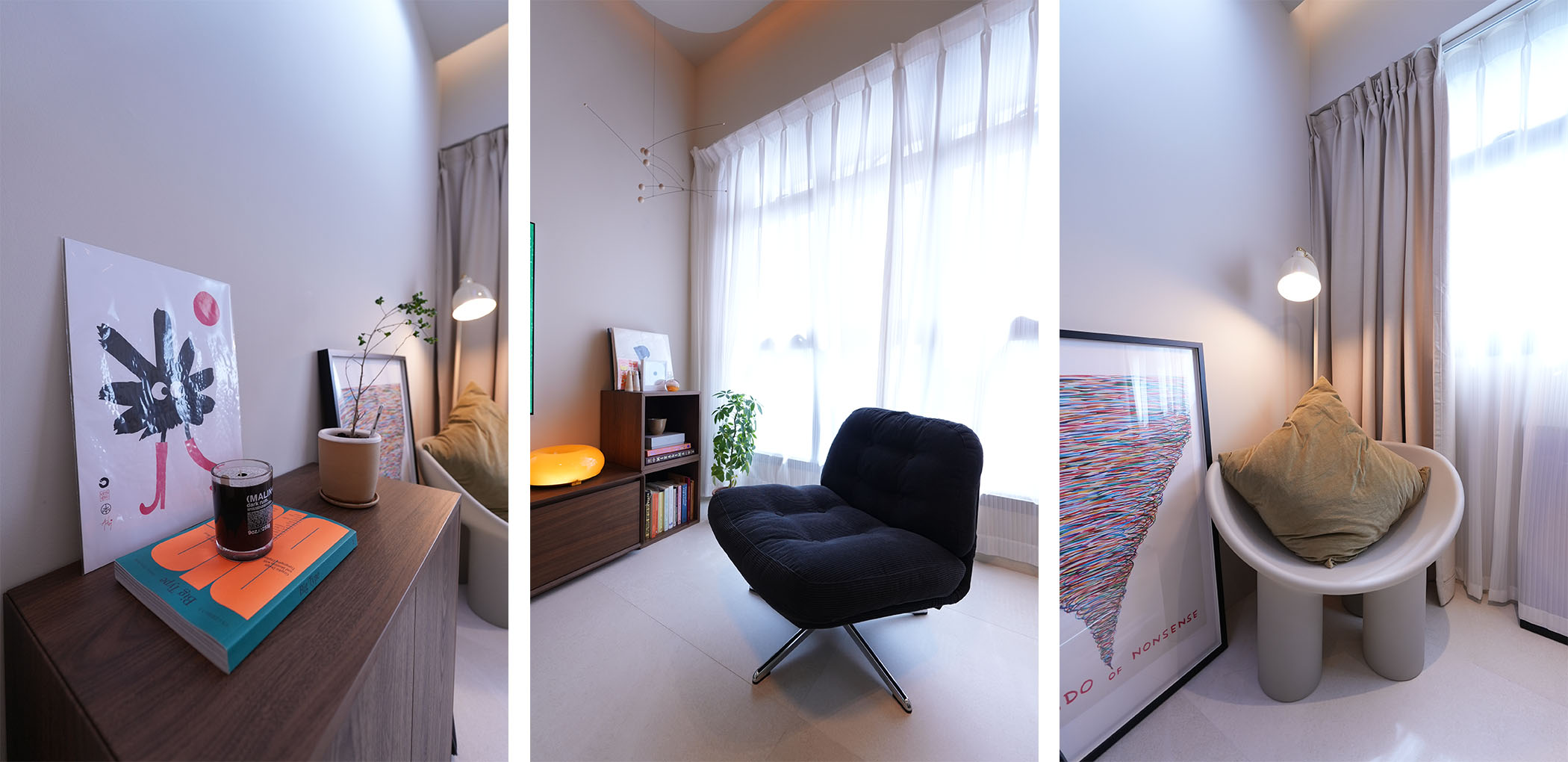
The atmosphere is shaped through a series of practical decisions, generous circulation around the communal spaces, unobstructed sight lines, access to natural light and a consistent architectural language that ties the home together.
None of these decisions are particularly dramatic on their own.
Collectively, however, they establish the clarity and ease that define the home.
This reflects a philosophy that D&I Design Interior has become known for, one where functionality and aesthetics are developed together rather than treated as separate objectives.
The result is a home that works well not only in photographs, but in everyday life.
A Home Designed for Longevity
Renovation trends move quickly. Colours, finishes and styling preferences that feel current today can often feel dated a few years later.
What tends to endure are homes that have been planned with clarity and purpose.
This Punggol Way residence demonstrates that successful design is not necessarily about introducing more features or making bolder statements. Sometimes it is about editing carefully, simplifying where possible and allowing the architecture itself to shape the experience.
More importantly, it demonstrates that a successful home is not always the one that attracts the most attention.
Often, it is the one that feels effortless to live in, day after day.
About D&I Design Interior
D&I Design Interior approaches residential design through a balance of thoughtful planning, technical understanding and practical problem-solving. Rather than focusing solely on aesthetics, the firm prioritises solutions that support the way homeowners live on a daily basis.
Known for placing needs before wants, D&I believes that the most successful homes are those where functionality and design work together seamlessly. This philosophy allows the studio to create spaces that are not only visually enduring, but also comfortable and adaptable over the long term.
Frequently Asked Questions
What makes a 5-room HDB feel more spacious?
Thoughtful spatial planning, unobstructed sight lines, natural light and well-considered circulation often contribute more to the perception of space than square footage alone.
Are curved design elements suitable for HDB homes?
Yes. When used purposefully, curves can soften transitions between spaces and create a more fluid living experience without compromising functionality.
What is a minimalist contemporary interior design style?
Minimalist contemporary interiors focus on clarity, restraint and purposeful detailing. The goal is to create spaces that feel calm, functional and timeless.
How much does a 5-room HDB renovation typically cost?
Costs vary depending on scope, materials and customisation. Establishing a clear renovation budget and planning strategy early is often the best starting point.
Why is planning important before renovation begins?
Planning influences everything from circulation and storage to lighting and daily functionality. In many cases, thoughtful planning has a greater impact on long-term liveability than decorative choices alone.


