

When you're waiting for your BTO, it is easy to spend years imagining your future home.
Pinterest boards grow. Screenshots pile up. You start thinking about kitchen colours, carpentry, tiles and furniture long before collecting the keys.
But if you're currently living under the Parenthood Provisional Housing Scheme (PPHS), there is another source of renovation research sitting much closer to home.
The home you're already living in.
You cook there. You do laundry there. Groceries need somewhere to go. Children play wherever they decide to play. Clutter appears in places you never planned for.
Over time, those ordinary routines reveal something inspiration images and floor plans cannot: how you actually live.
So rather than seeing PPHS purely as somewhere to stay while waiting for your BTO, treat it as a trial run for your future home.

Your PPHS Flat Is Temporary. Your Habits Aren't.
Most households enter PPHS knowing they will eventually leave. Naturally, you probably won't invest heavily in a space that isn't your permanent home.
But you're still running a household.
And those repeated routines can tell you a surprising amount about what your future home needs.
Look at where shoes, bags and parcels naturally accumulate. Notice where your children prefer to play. Think about which cupboards are constantly overflowing and which ones are barely used.
Instead of dismissing these as quirks of a temporary home, ask why they keep happening.
If shoes are constantly piling up near the entrance, perhaps your future home needs better entryway storage.
If toys always migrate into the living room, perhaps children's storage belongs in the common area rather than being hidden away in a bedroom.
Even clutter can be useful information.
Pay Attention to Storage, Not Just How Much of It You Have
"Lots of storage" is one of the easiest things to ask an interior designer for.
The harder question is: storage for what, and where?
Living in PPHS gives you time to find out.
Kitchen supplies, shoes, luggage, cleaning equipment, children's belongings, bedding, toiletries and household stock all need somewhere to go.
You might discover that you need more storage than expected. But you might also realise the problem isn't quantity. It is having the right storage where you actually use it.
That distinction matters.
Rather than filling your future BTO with carpentry simply to create "more storage", you can plan it around actual household behaviour.
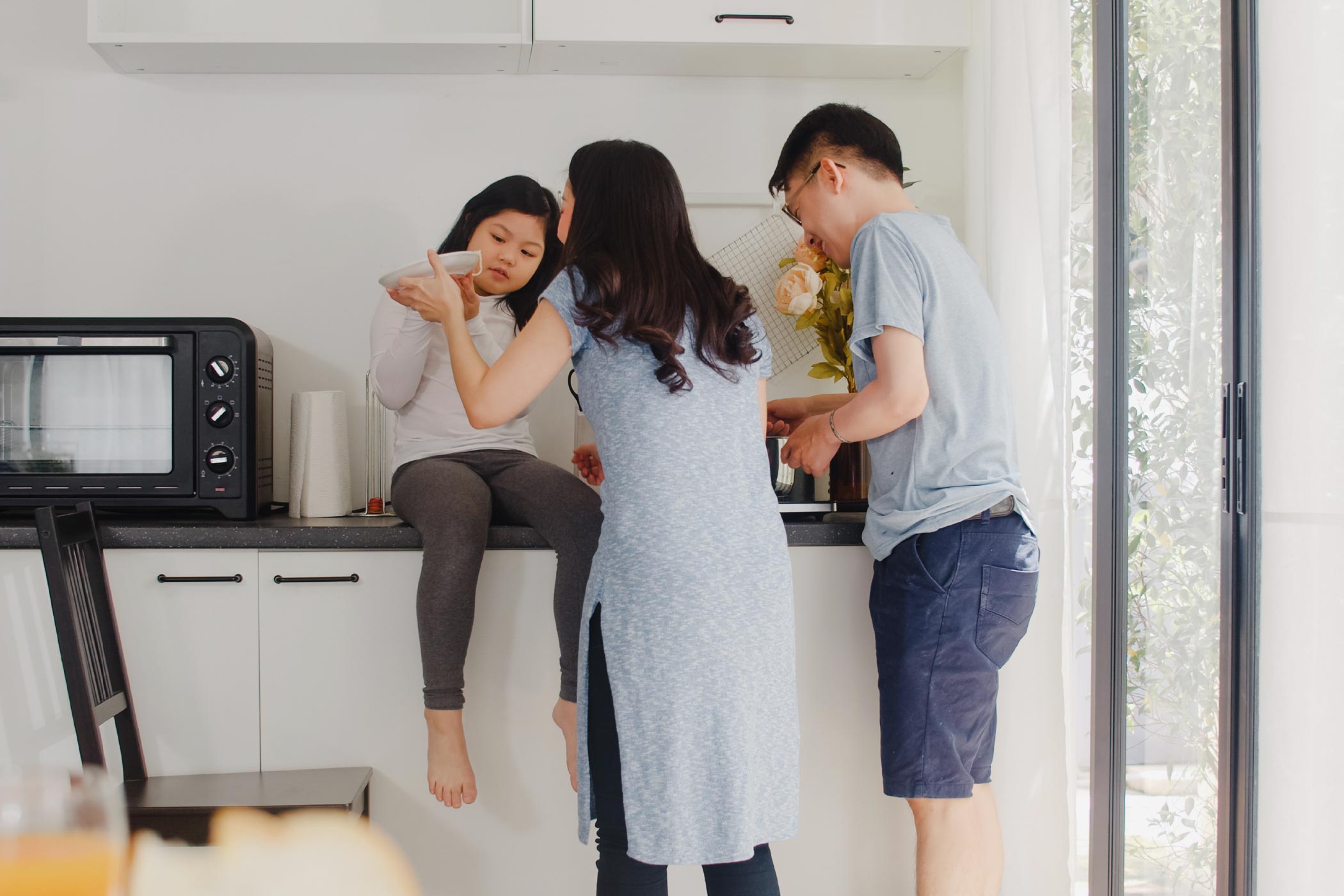
Your Kitchen Is Probably Teaching You the Most
Few spaces reveal household habits as quickly as a kitchen.
Forget, for a moment, what your dream kitchen looks like. Watch how you actually use the one you have.
Which appliances remain permanently on the countertop?
Do two people cook at the same time?
Where do groceries go after a supermarket run?
Do you have enough preparation space?
Which cupboards are frustrating to reach?
Small annoyances are easy to tolerate in a temporary home. But they become useful renovation intelligence when you're planning a permanent one.
If you're constantly running out of countertop space, that tells you something. If an appliance never gets packed away because you use it every morning, perhaps it deserves a permanent place in your future kitchen.
Good kitchen planning starts with routines, not reference images.

A Growing Family Changes What "Good Design" Means
This becomes even more apparent for households with young children.
A home designed around two adults can function very differently once toys, books, school bags, clothes and children's routines enter the picture.
More importantly, children don't necessarily use spaces the way adults imagine they will.
You might create a dedicated play corner only to discover that your child prefers playing beside you in the living room.
That's worth remembering.
Your future BTO may not need a bigger play area. It may need better integrated storage where family life actually happens.
The same thinking applies as children grow. A good home should not only solve today's needs; where possible, it should be able to adapt to tomorrow's.
Test Your Assumptions Before You Pay to Build Them
One advantage of a temporary home is that you have time to discover that some of your original ideas were wrong.
That's useful.
Renovation turns ideas into physical decisions, and physical decisions can be expensive to change.
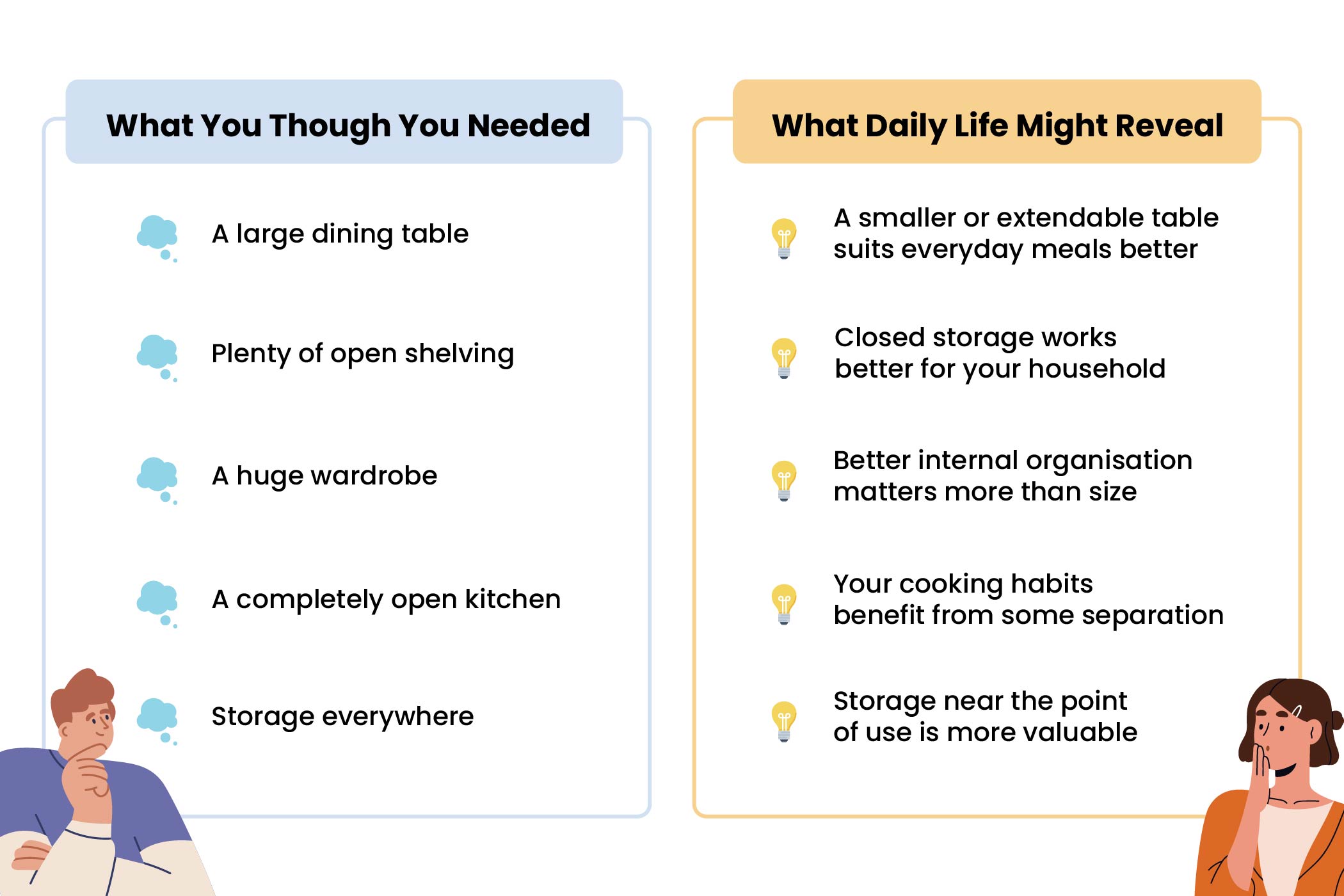
PPHS gives you a period in which assumptions can be tested simply by living.
This isn't about abandoning everything you've imagined for your BTO.
It's about separating what looks appealing from what genuinely supports your lifestyle.
Turn Your PPHS Experience Into a Better Renovation Brief
You don't need to start planning every detail of your renovation years in advance.
Instead, keep a simple record while you're living in PPHS. 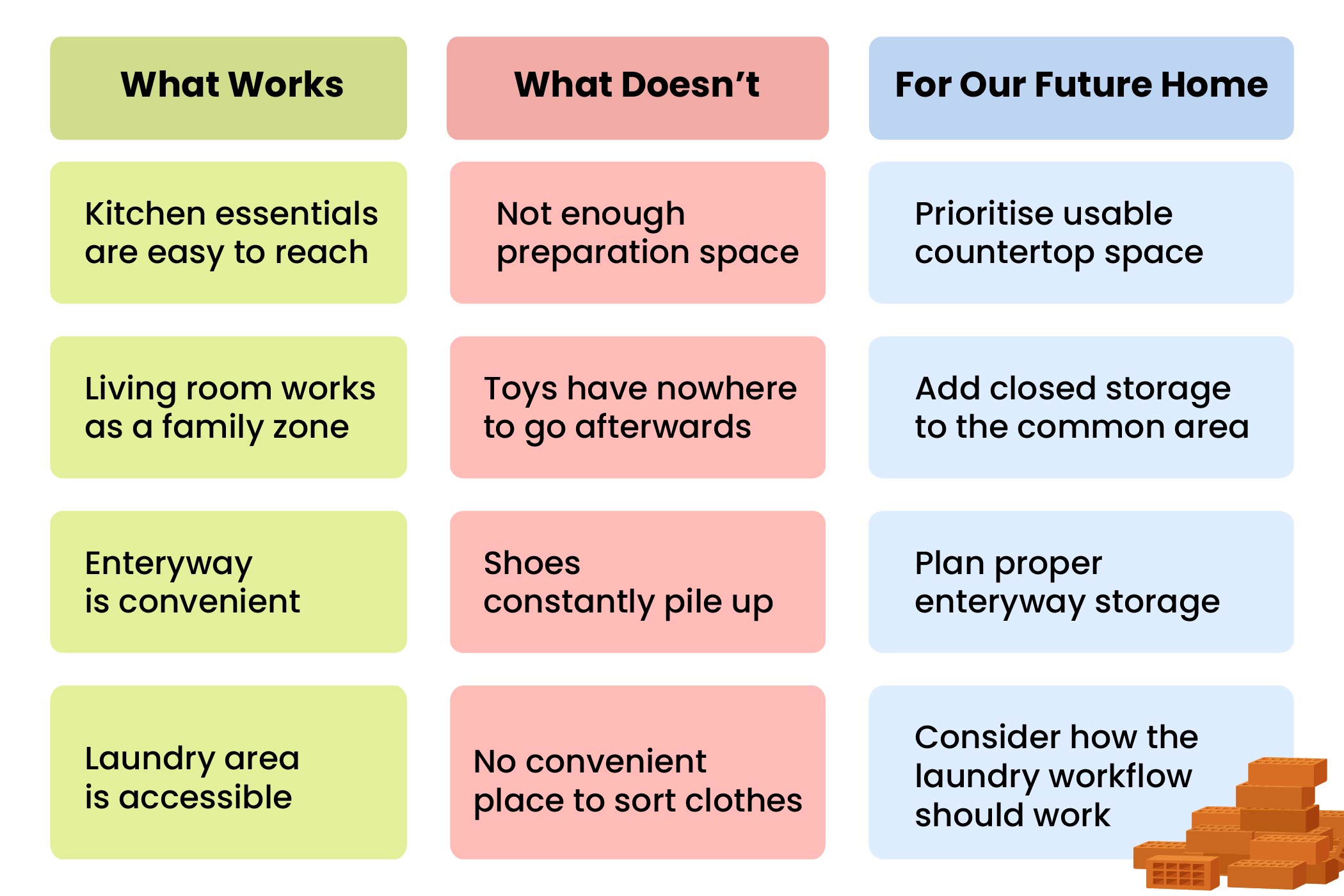
Over time, patterns will emerge. When the time comes to start working with an interior designer, bring those observations into the conversation.
Instead of simply saying: "We like Japandi."
you can say: "We cook almost every night and normally have three appliances on the countertop."
Or: "Our child spends most evenings in the living room, so we need accessible storage there."
The first communicates taste.
The second communicates how the home needs to work.
A good designer needs both.
Your Temporary Home Can Teach You How to Design Your Permanent One
Your PPHS flat does not need to resemble your future BTO.
In fact, it probably shouldn't.
The value of treating PPHS as a trial run isn't about copying the layout or recreating the same solutions.
It is about understanding the behaviour behind them.
By the time you collect your BTO keys, you may know far more about your household than when you first booked the flat: how you cook, where clutter appears, what storage gets used, which spaces work hardest and what you thought you wanted but no longer need.
Those insights can also help you decide where your renovation budget deserves to go.
Your PPHS flat doesn't have to look like your dream home. It has another job: it can teach you how to design one.
Frequently Asked Questions About Preparing for Your Future Home While Living in PPHS
What should I observe while living in PPHS before renovating my BTO?
Pay attention to repeated behaviours. Look at where clutter gathers, which storage you use most, how your kitchen functions, where your family spends time and which parts of the home regularly cause frustration.
How can PPHS help me plan my future kitchen?
Observe how you cook rather than focusing only on how you want the kitchen to look. Consider appliance placement, countertop usage, grocery storage, cooking frequency and which items need to remain within easy reach.
How do I know how much storage my future BTO needs?
Start by understanding what your household actually owns and where those items are used. The goal isn't simply more storage, but better-positioned storage that supports your daily routines.
What should families with children pay attention to?
Watch where children naturally play, where their belongings accumulate and how common spaces are used together as a family. These patterns can inform more practical storage and flexible spaces in your future home.
How can I turn what I learn from PPHS into a renovation brief for my future BTO?
Take note of the things that work well in your PPHS flat, as well as the everyday frustrations you encounter. This could be anything from not having enough kitchen countertop space to needing more storage near the entrance or realising that your family spends most of its time in the living room.
When it is time to renovate your future BTO, bring these observations into your conversations with your interior designer. They provide a clearer picture of your household's actual routines and needs, helping the designer plan a home around how you live rather than relying on aesthetics alone.


