

Imagine planning a retirement home for your parents. You've saved for years, spoken to several renovation companies and received quotations ranging from around $130,000 to $150,000.
Then another company comes along and says it can do the job for around $80,000.
Naturally, you pay attention.
This was essentially the situation highlighted in a recent CNA Money Mind report involving homeowner Errol Lee and his family. What began as an attractive renovation quote eventually became a nightmare costing the family around $216,000 after additional payments, incomplete works and the need to appoint another contractor to salvage the project.
What struck me wasn't simply the amount of money lost.
It was how something that initially looked like a good deal could become so expensive.
And as we move through a difficult 2026 business environment, I think homeowners need to understand that one of the biggest renovation risks may not necessarily come from someone who wakes up intending to scam you.
Sometimes, the danger is a company that simply cannot afford to finish your home.

The Cheapest Renovation Quote Can Become the Most Expensive
This is something I've repeatedly said about renovation quotations: the number at the bottom of the page means very little without understanding how the company arrived at it.
If three companies tell you your renovation will cost approximately $130,000 and somebody suddenly offers to do apparently the same thing for $80,000, perhaps the first reaction shouldn't be:
“Wah, good deal.”
It should be:
“Why?”
Maybe that company genuinely has lower overheads. Perhaps it has a more efficient supply chain. Maybe the specifications aren't actually comparable.
All perfectly legitimate possibilities.
But there is another possibility homeowners rarely consider: perhaps the company simply needs the project, and needing sales is very different from making profitable sales.
A renovation company can have a full order book and still be losing money. In fact, sometimes rapidly growing sales can make a financially distressed business even more vulnerable because every new project creates new obligations.
This becomes especially dangerous when new customer deposits begin supporting existing projects.
Project B helps complete Project A. Project C helps fund Project B. Project D keeps everything moving.
It works... until there is no Project E.

Renovation Scam or Business Distress?
This distinction is important because homeowners understandably tend to describe almost every disappearing contractor as a scammer.
Sometimes that may indeed be what happened.
Imagine Contractor A. He collects your $30,000 deposit but never genuinely intended to complete the renovation. He makes excuses, delays the project, disappears and repeats the same thing with several other homeowners.
That's potentially cheating.
Now imagine Contractor B. He also collects $30,000, but he genuinely intends to complete your renovation. Unfortunately, his company is already struggling. Suppliers demand payment, projects overrun, subcontractors stop working and cash flow collapses. Eventually, he cannot finish your home either.
To the homeowner, both stories may end almost identically.
Money gone. Contractor gone. House unfinished.
But legally, they can be very different because cheating requires evidence of fraudulent intent.
That distinction shouldn't be interpreted as excusing irresponsible business behaviour. A badly managed company can cause enormous financial damage without necessarily having begun with criminal intentions.
And that's precisely why homeowners need to look beyond the question:
“Is this company a scam?”
Perhaps the better question is:
“Is this company financially capable of completing my home?”
A Renovation Company in Financial Distress Leaves Clues
Companies rarely go from perfectly healthy on Monday to collapsing on Tuesday.
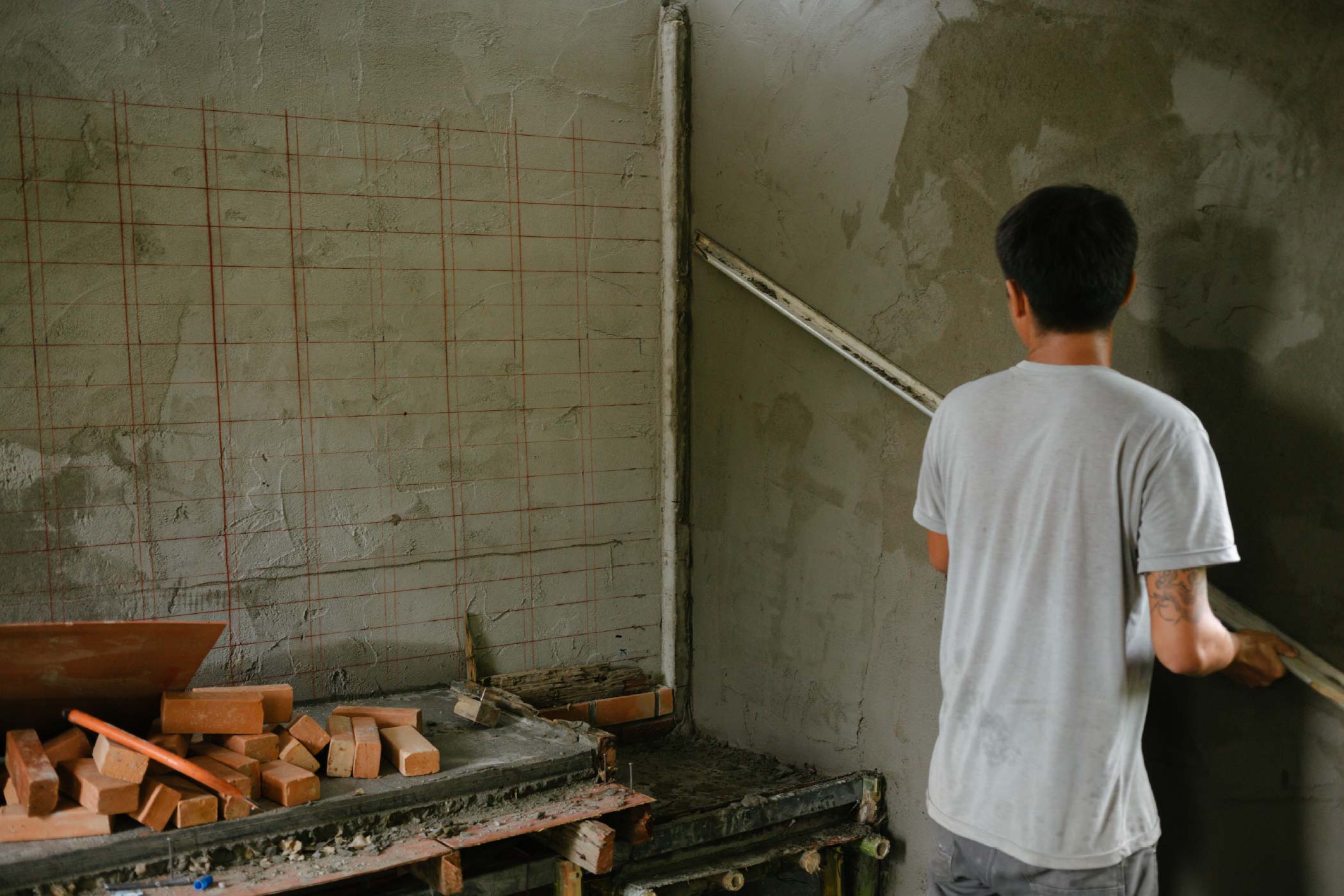
There can be warning signs. Progress slows. Materials don't arrive when promised. Subcontractors repeatedly change. Suppliers appear unwilling to continue work. Communication becomes increasingly evasive. Payment requests begin moving ahead of actual site progress. Suddenly there are unexplained requests for additional payments or transfers outside the normal company account.
None of these individually proves fraud or imminent collapse, but recurring patterns matter, and in a difficult market, homeowners need to become more sensitive to them.
This is particularly relevant in 2026. The wider Singapore construction sector has seen elevated business closures, although those figures should not be interpreted as renovation firms specifically or as proof that renovation failures will inevitably increase.
What they do tell us is that parts of the industry are under financial pressure, and financial pressure changes behaviour.
The Showroom Doesn't Show You the Balance Sheet
This is perhaps one of the greatest difficulties homeowners face. You can visit a beautiful showroom and see awards on the wall. Or you can meet an incredibly convincing salesperson and scroll through hundreds of photographs of completed homes by them.
None of those things necessarily tells you whether the company can pay its suppliers next month. Which is why I think the next evolution in renovation consumer protection has to go beyond aesthetics, online reviews and attractive quotations.
Homeowners need better ways to assess the businesses behind the designs.
Who owns the company? How long has it operated? What other renovation businesses have its directors operated? Are payments structured sensibly? Are deposits disproportionately large? Is project progress keeping pace with payment milestones?
These aren't particularly sexy questions. Nobody puts “healthy cash flow” on their Pinterest moodboard, but if you seriously think about it, isn’t that the most important factor now?
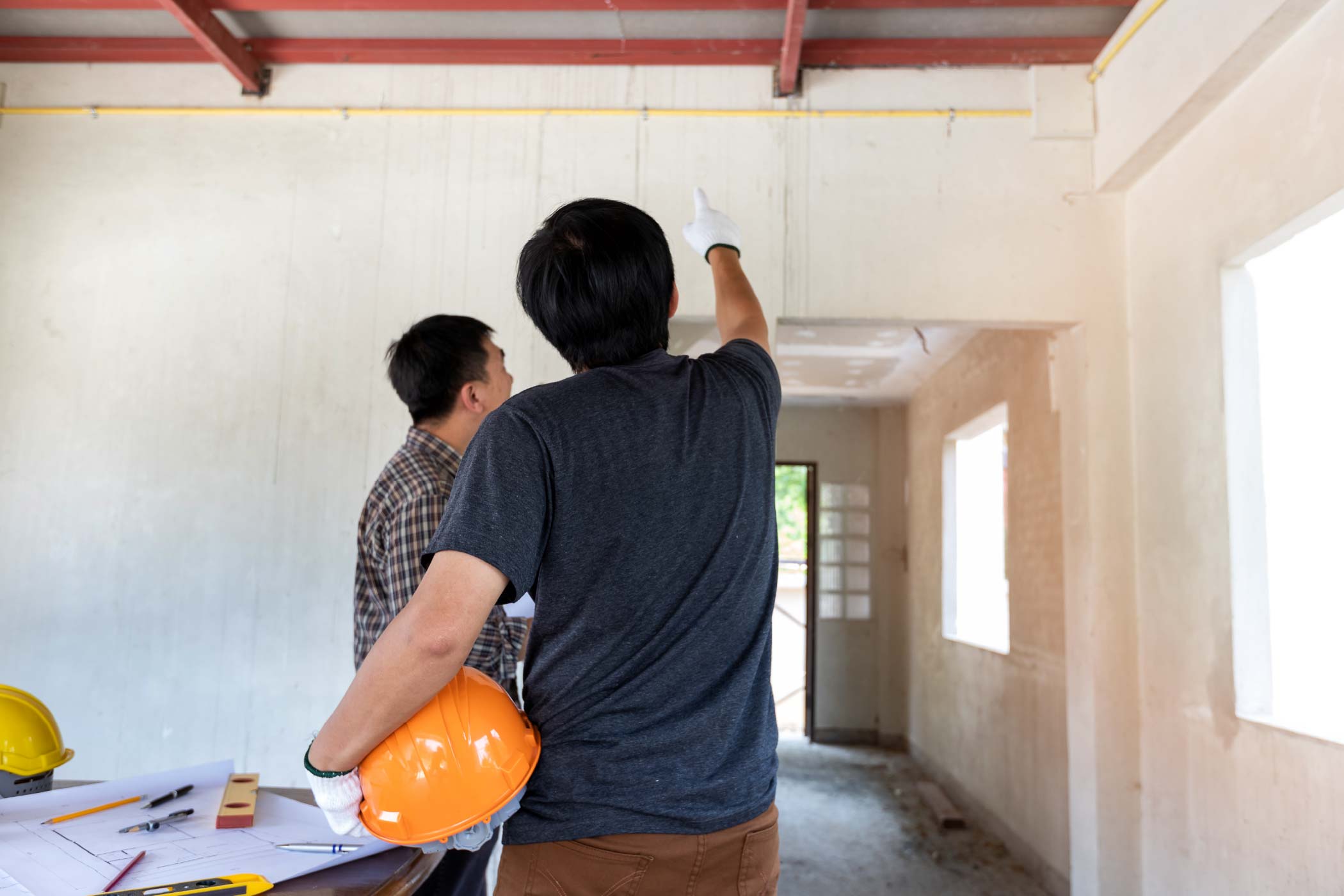
An $80,000 renovation quote isn't worth $80,000 if nobody can deliver it
What affected me most about the CNA story was that this involved a home intended for the parents' retirement. Renovating a home should be exciting. Instead, the family was left spending significantly more money to recover from a project that had gone wrong.
This is why price cannot be the only measure of value. A quotation isn't merely a promise about what your renovation will cost.
It's also a promise that somebody will still have the resources to deliver it.
Homeowners shouldn't have to become forensic accountants before renovating their flats. But in the current environment, we do need to become more financially aware.
Sometimes it's the contractor who desperately needs your deposit to survive another month, and by the time you discover the difference, your money may already be inside the company.
So when one quotation looks dramatically cheaper than everybody else's, don't simply ask:
“How much can I save?”
Ask:
“How can they afford to do this?”
Sometimes that question could save you far more.
Frequently Asked Questions About Renovation Quote
Why can a cheap renovation quote be risky?
A significantly cheaper renovation quote is not automatically a red flag. A company may have lower overheads, a more efficient supply chain or different specifications. But homeowners should understand why the price is lower, especially when several other quotations are substantially higher.
What should I do if one renovation quote is much cheaper than the others?
Compare what is actually included in each quotation and ask how the company can deliver the project at that price. Rather than looking only at how much you can save, consider whether the renovation company has the resources to complete the work.
What are the warning signs that a renovation company may be in financial difficulty?
Possible warning signs can include slowing progress, delayed materials, repeated changes in subcontractors, suppliers appearing unwilling to continue work, increasingly evasive communication, payment requests moving ahead of site progress and unexplained requests for additional payments. No single sign proves that a company is in financial distress, but recurring patterns deserve attention.
Does an unfinished renovation mean the contractor scammed me?
Not necessarily. A contractor who never intended to complete the work and a company that becomes unable to finish because of financial difficulties can leave homeowners facing similar consequences, but the circumstances may be very different. A failed contract alone does not necessarily amount to cheating.
What should I check before choosing a renovation company in Singapore?
Look beyond the showroom, portfolio and online reviews. Consider how long the company has operated, who owns it, whether its directors have operated other renovation businesses, how deposits are structured and whether payment milestones keep pace with actual project progress.


