

There are few design philosophies that have travelled as far—or changed as much—as Wabi-Sabi.
Originally rooted in Japanese philosophy and Zen Buddhism, it has become one of the most recognisable terms in contemporary interior design. But somewhere along the journey, many of us stopped talking about the philosophy itself and started talking about colours, textures and styling instead.
That shift is what this article explores.
"You keep using that word. I do not think it means what you think it means."
Every few years, the interior design industry finds a new buzzword.
-
Scandinavian.
-
Japandi.
-
Industrial.
-
Minimalist.
-
Organic Modern.
And for the past few years?
It's Wabi-Sabi.
If you've been scrolling renovation portals or Pinterest long enough, you've probably seen it.
Beige walls.
Curved arches.
Microcement.
Limewash paint.
A Travertine coffee table.
A dried branch sticking out from a vase that probably costs more than your dining chair.
Congratulations.
You now live in a Wabi-Sabi home.
Or do you?
Somewhere Along the Way, We Started Designing From Instagram
Instead of designing around the philosophy of Wabi-Sabi, we slowly began designing around Instagram feeds.
Let's be honest.
If Wabi-Sabi was a person, it would probably look at half the homes labelled "Wabi-Sabi" in Singapore...
...and quietly leave without saying anything.
Because that, ironically, would be the most Wabi-Sabi thing to do.
Somewhere along the journey, the philosophy became a colour palette.
It became an aesthetic.
Interior designers began building renovation packages around the theme.
Eventually, it became a hashtag.
What began as a Japanese philosophy about accepting imperfection somehow became an expensive pursuit of perfectly executed imperfection.
And yes...
Read that again.
Perfectly executed imperfection.
If that sounds contradictory...
That's because it is.
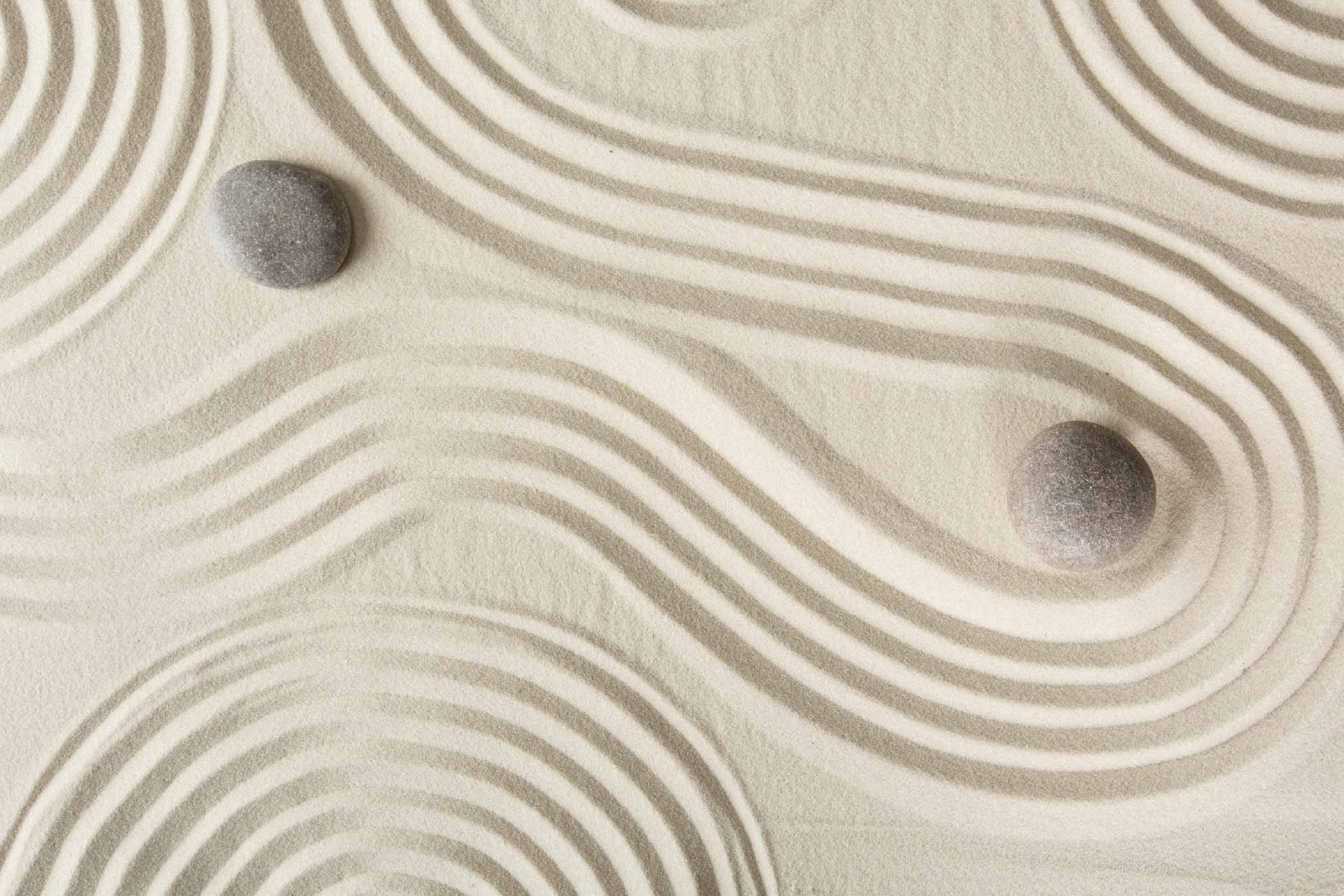
Wabi-Sabi Was Never About Looking Rustic
Most people think Wabi-Sabi means:
-
Beige.
-
Textured walls.
-
Curves.
-
Stone.
-
Earthy colours.
None of these are wrong.
They're just... incomplete.
Wabi-Sabi isn't a design style.
It's a worldview.
Originating from Zen Buddhism, Wabi-Sabi embraces three simple ideas:
-
Nothing lasts.
-
Nothing is complete.
-
Nothing is perfect.
That's it.
Everything else is merely an expression of those beliefs.
The texture isn't the philosophy.
-
The crack is.
-
The ageing is.
-
The weathering is.
-
The acceptance is.
The Japanese Didn't Spend Thousands Trying to Fake Imperfection
Here's where it gets funny.
Many homeowners today spend tens of thousands creating perfectly seamless microcement walls...
...only to call it "imperfection."
Have you ever watched a contractor trying to repair a tiny blemish on a microcement wall?
It's almost comical.
One tiny scratch and the entire wall gets repainted.
Three workers stare at it under different lighting.
Then someone quietly whispers,
"I still can see the patch."
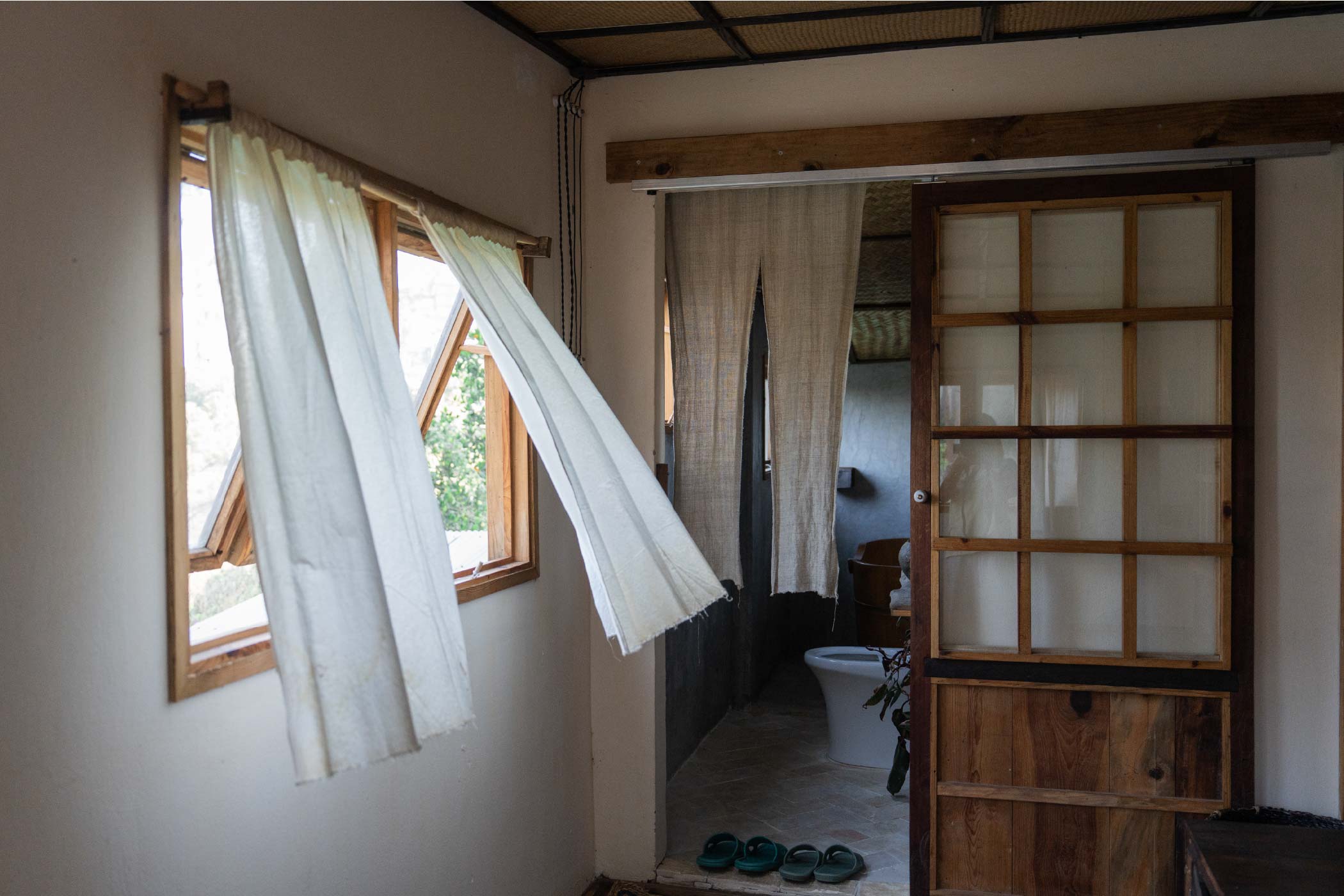
Meanwhile, actual Wabi-Sabi is sitting quietly in the Japanese countryside, admiring a hundred-year-old timber beam that has cracked naturally over time.
No one is trying to fix it.
Because its imperfections tell its story.
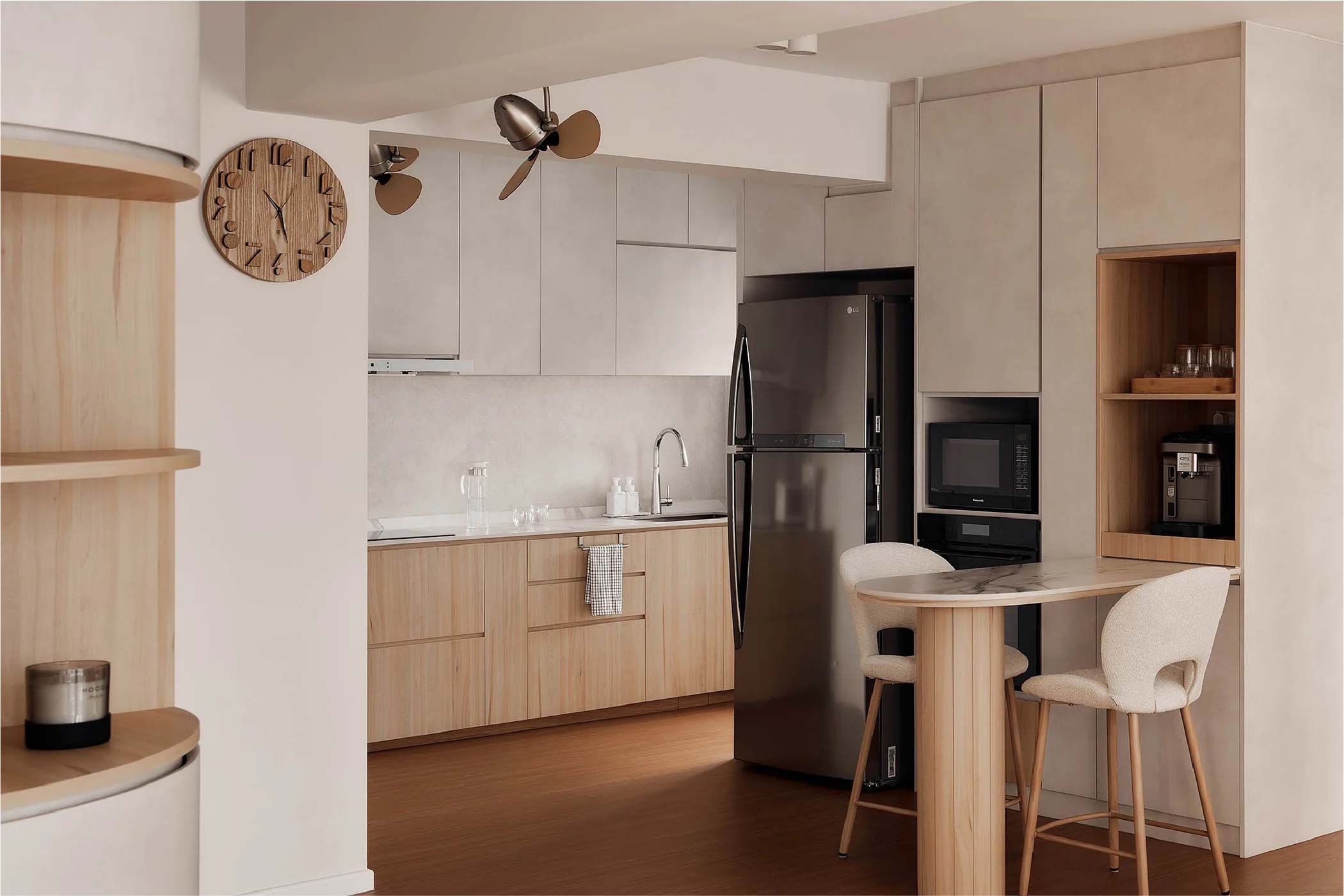
Image credit: Elpis Interior Design
Age Is Not the Enemy
Singapore loves things that are new.
Brand-new condominiums.
Brand-new carpentry.
Brand-new quartz countertops.
Brand-new everything.
And the moment something chips...
We panic.
We call the contractor.
We claim the warranty.
We ask for it to be replaced.
But Wabi-Sabi asks a different question.
-
What if ageing isn't damage?
-
What if your timber darkening isn't deterioration?
-
What if brass tarnishing isn't failure?
-
What if leather creasing means it has been loved?
-
What if that dining table carries twenty years of family dinners?
That's beauty.
Not despite the age.
Because of it.
It gives a home character.
It gives materials a story.
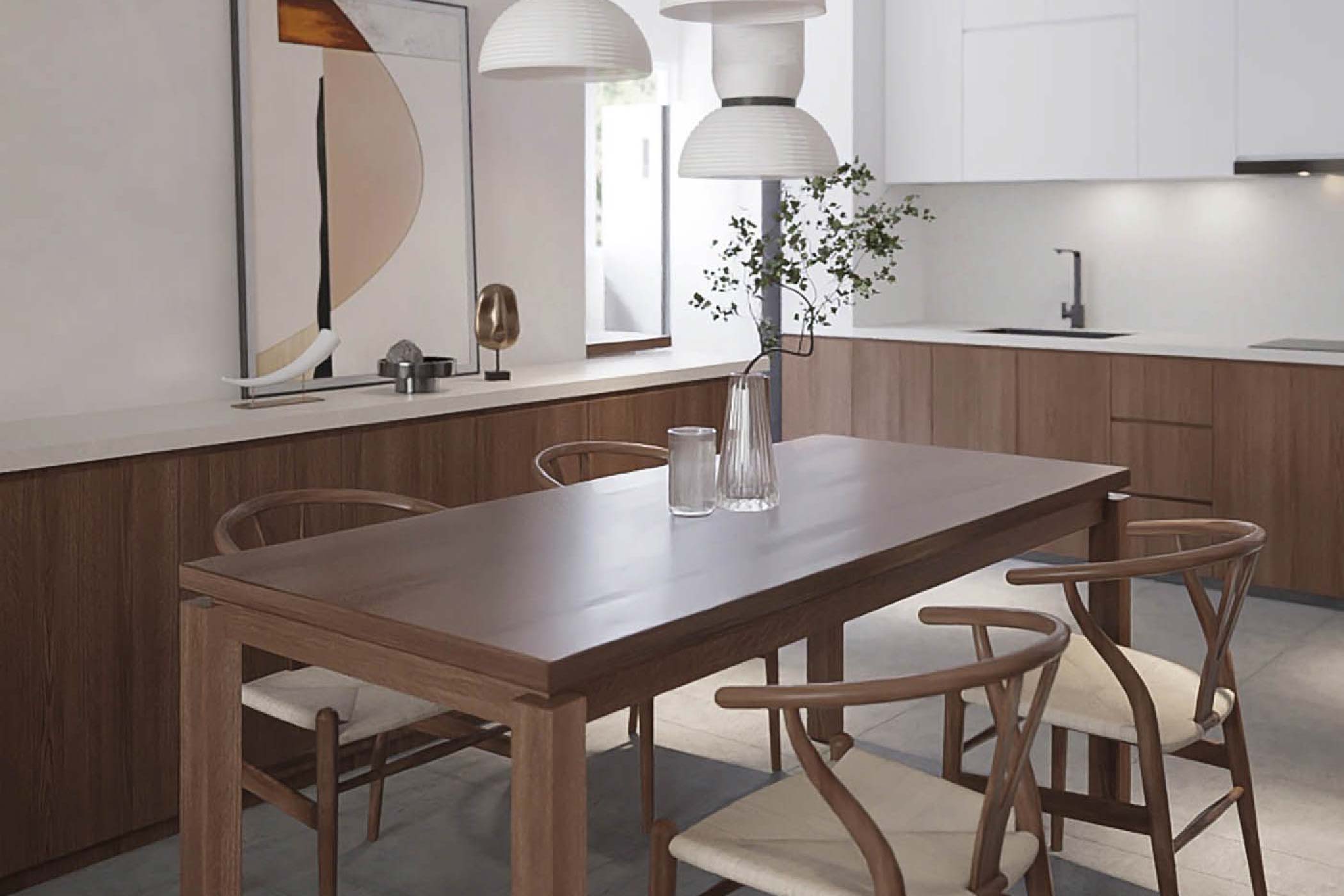
Image credit: SPACIE
Materiality Matters More Than Styling
This is where many designers accidentally miss the point.
Buying dried branches from a lifestyle store doesn't suddenly make a home Wabi-Sabi.
Material selection does.
Think about materials that continue becoming more beautiful over time.
-
Solid timber.
-
Natural stone.
-
Clay.
-
Lime plaster.
-
Linen.
-
Cotton.
-
Leather.
-
Bronze.
-
Copper.
Materials that develop patina instead of becoming obsolete.
Materials that record life.
Not hide it.
Engineered perfection has its place.
Wabi-Sabi, on the other hand, celebrates authenticity over uniformity.
The Wabi-Sabi Cheat Sheet
If you're wondering whether something leans towards genuine Wabi-Sabi, here's a quick test.
Ask yourself:
-
Does it age beautifully? If yes, you're on the right track.
-
Can nature change it? Sunlight, oxidation, wear and time should improve it—not ruin it.
-
Does every piece have to be identical? If perfection is mandatory, it probably isn't Wabi-Sabi.
-
Can you repair instead of replace? Visible repairs often become part of the story.
-
Does the home feel calm instead of impressive? Wabi-Sabi isn't trying to impress visitors. It's trying to make the people who live there feel at peace.
The Biggest Irony of Wabi-Sabi
Perhaps the greatest irony of all...
The more we try to design Wabi-Sabi...
The further we move away from it.
Because once you're obsessing over whether the curve radius should be 80mm or 100mm...
Or whether your limewash texture has enough "organic movement"...
You've already forgotten why Wabi-Sabi existed in the first place.
It was never about the wall.
It was about the mindset.
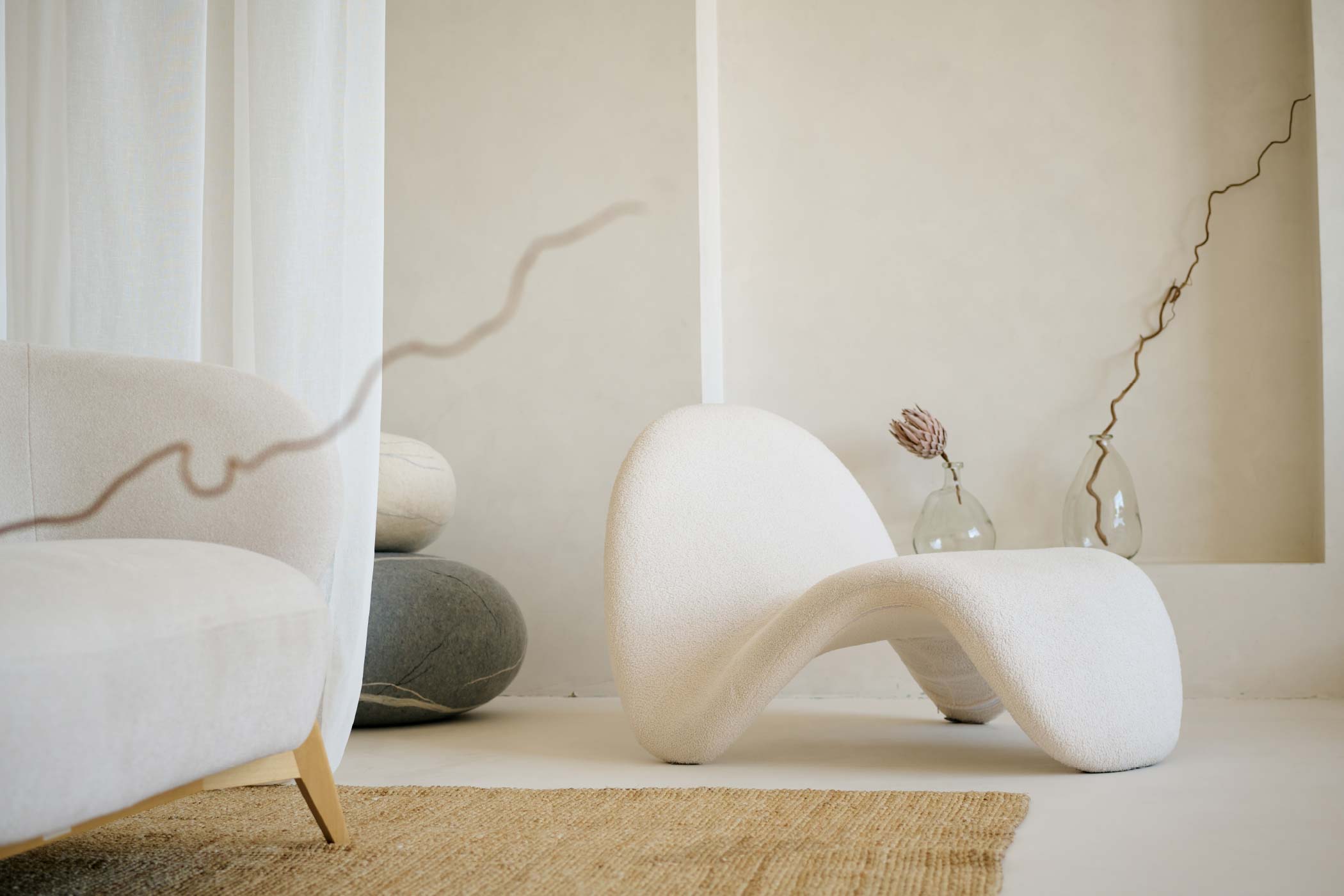
Maybe We Should Stop Calling Everything Wabi-Sabi
There's nothing wrong with soft neutrals.
Nothing wrong with curves.
Nothing wrong with textured finishes.
They're beautiful, timeless and, honestly, I'm genuinely impressed by the craftsmanship many designers in Singapore produce.
In fact, many of these homes are exceptionally well executed.
But perhaps...
We should simply call them what they are.
-
Contemporary.
-
Organic.
-
Minimal.
-
Japandi-inspired.
-
Earth-toned.
Because Wabi-Sabi deserves to remain more than a Pinterest search term.
It deserves to remain what it has always been.
A quiet reminder that beauty isn't manufactured.
It's accumulated.
Weathered.
Imperfect.
And perhaps...
That's something our renovation industry could learn too.
The Nerd's Final Thought
If your contractor is still trying to make your "imperfect" wall absolutely perfect...
...you probably aren't building a Wabi-Sabi home.
You're building an expensive beige house with commitment issues.
Frequently Asked Questions About Wabi-Sabi
What is Wabi-Sabi in interior design?
Wabi-Sabi is a Japanese philosophy rooted in Zen Buddhism that embraces imperfection, impermanence and authenticity. Rather than focusing on appearance alone, it encourages appreciation for natural ageing, simplicity and the stories materials tell over time.
Is Wabi-Sabi a design style?
Not originally. While it has influenced many interior styles, Wabi-Sabi began as a philosophy rather than a decorating trend. Its principles can be expressed through design, but they are not limited to colours, textures or furniture choices.
What's the difference between Japandi and Wabi-Sabi?
Japandi is a design style that combines Japanese and Scandinavian influences, while Wabi-Sabi is a broader philosophy about embracing imperfection and the passage of time. A Japandi home may incorporate Wabi-Sabi principles, but the two are not interchangeable.
What materials are commonly associated with Wabi-Sabi homes?
Natural materials such as solid timber, natural stone, clay, lime plaster, linen, leather, bronze and copper are often associated with Wabi-Sabi because they develop character and patina over time rather than trying to resist ageing.
Can a modern Singapore home embrace Wabi-Sabi?
Yes. Wabi-Sabi is less about recreating a traditional Japanese home and more about choosing materials, spaces and objects that age gracefully, feel authentic and prioritise calm over perfection.


