

Perhaps the renovation boom of the last few years wasn't the beginning of something new. Perhaps it was the final extension of something old.
There is an uncomfortable question that Singapore's renovation industry may have to confront:
Did COVID save us?
Not permanently, of course. But did the pandemic give Singapore's interior design and renovation trade several additional years of prosperity while delaying a structural change that was already coming?
I think there is a case to be made that it did. And if that is true, what we are experiencing today may not simply be another renovation downturn. It could be the market finally catching up with the inevitable.
Before COVID, the cracks were already showing
For years, the Singapore renovation industry operated on a relatively predictable model.
-
You bought a home.
-
You looked for an interior designer.
The designer designed the home, coordinated the contractors, recommended materials, brought you to suppliers and helped you purchase much of what eventually went into the house. It was a very powerful position to occupy. The ID wasn't merely selling design.
We controlled, or at least influenced, a large part of the homeowner's renovation supply chain.
-
Carpentry.
-
Lighting.
-
Furniture.
-
Sanitaryware.
-
Kitchen appliances.
-
Surfaces.
-
Curtains.
-
Accessories.
But long before COVID arrived, consumer behaviour was already changing.
Homeowners were becoming better informed.
-
Pinterest gave them inspiration.
-
Instagram gave them portfolios.
-
Google gave them reviews.
-
Renovation platforms allowed them to compare designers.
-
Taobao gave them access to products that previously required an importer, retailer or designer.
-
YouTube taught them how things were constructed.
-
And WhatsApp allowed homeowners to communicate directly with almost everybody involved in their renovation.
Slowly, information asymmetry was disappearing. Yet much of the renovation trade continued operating the same way.
Then COVID happened.

COVID accidentally made the home the centre of our universe
When Singapore entered the Circuit Breaker in 2020, something extraordinary happened. Our homes stopped being merely where we returned to at night.
They became our offices, our schools, our makan place, gyms, cinemas and playgrounds.
For weeks and months, Singaporeans stared at their own walls and suddenly the shortcomings of our homes became painfully obvious. Our dining table wasn't suitable for working eight hours a day. We realised there wasn't enough storage for our junk.
The children had nowhere to study.
Couples needed separate spaces for Zoom calls but realised the lighting was wrong.
The furniture wasn't comfortable for long working hours and suddenly that spare bedroom had tremendous value.
COVID changed our relationship with our homes. And when restrictions eventually eased, many households had both the motivation and the willingness to spend money improving them.
For the renovation and home furnishing industries, this created an extraordinary tailwind.
But there was another COVID effect happening simultaneously.
The BTO shortage created the next wave
Construction was badly affected by COVID and the Circuit Breaker. Manpower shortages, supply-chain disruptions and construction stoppages delayed the completion of new flats.
For couples who wanted or needed homes sooner, waiting several more years for a BTO wasn't always attractive. So, attention shifted towards resale.
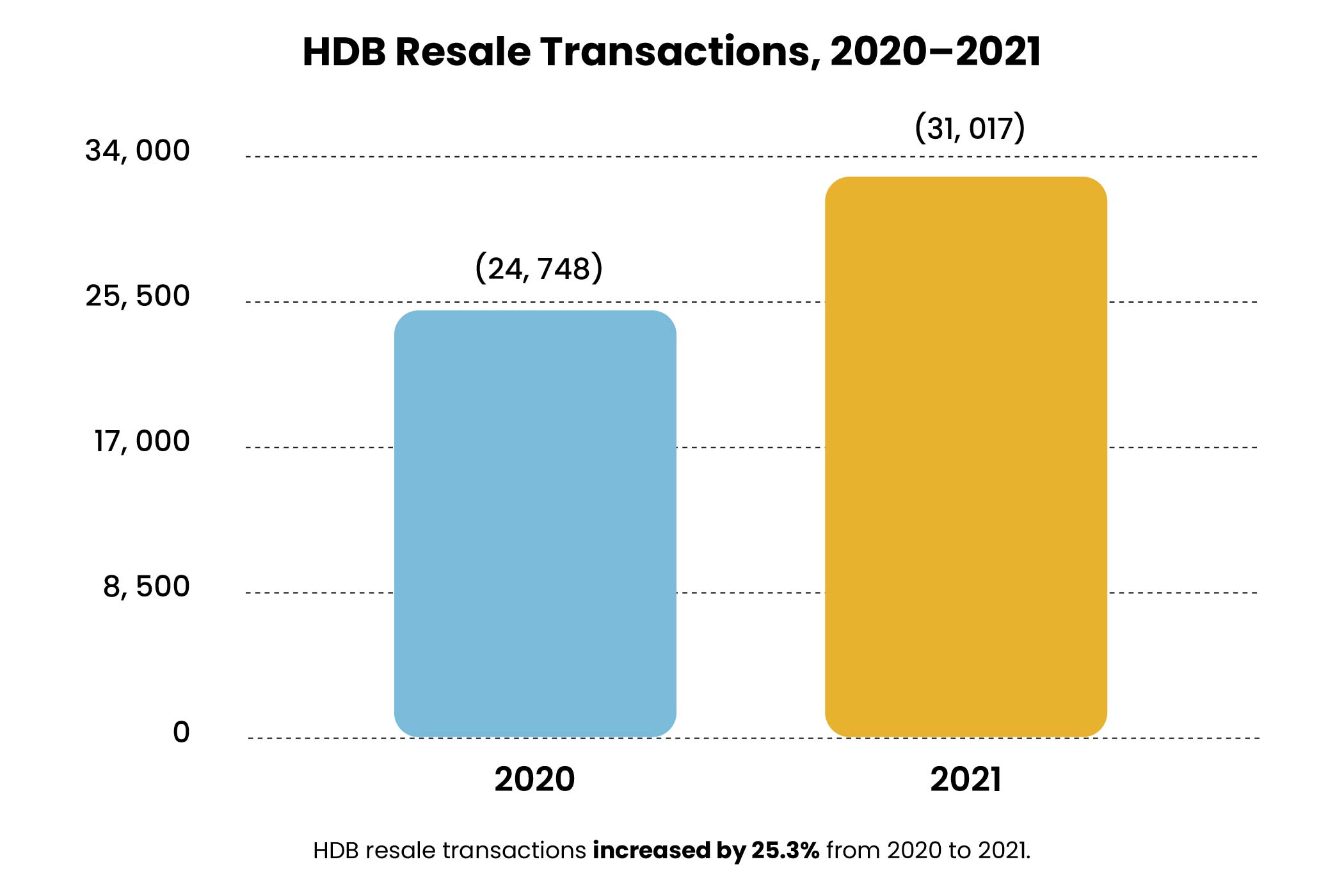
The numbers were dramatic. HDB resale transactions increased from 24,748 in 2020 to 31,017 in 2021, an increase of 25.3%.
And unlike a brand-new BTO where homeowners may sometimes retain existing finishes, older resale flats frequently require considerably more work.
-
Hacking.
-
Electrical rewiring.
-
Plumbing.
-
Flooring.
-
Bathrooms.
-
Kitchen replacement.
-
Carpentry.
-
Sometimes almost everything.
So just as the initial COVID home-improvement wave should have begun normalising, the resale market provided the renovation trade with another source of demand.
COVID gave us the first boost. The housing shortage gave us the second.
And perhaps together they disguised something important.
We mistook abnormal demand for a new normal
When business is good, industries rarely question their business models. Why would they?
Showrooms expanded. More ID firms appeared. More designers entered the profession and advertising budgets increased. Renovation platforms competed aggressively for homeowner leads. Social media became flooded with renovation content. Everyone was chasing the same homeowner.
From the outside, Singapore's renovation economy looked incredibly healthy. But perhaps we were measuring demand rather than relevance.
There is an important difference.
A rising tide can make almost every boat look seaworthy. Only when the tide goes out do we discover which ones were actually leaking.
Eventually, the extraordinary conditions created by COVID had to disappear.
Construction recovered. BTO supply recovered and the pandemic renovation rush subsided. The resale frenzy began normalising and the pent-up consumer spending was spent.
Life moved outside the home again. And suddenly the industry had to compete in something resembling a normal market.
Except the consumer was no longer the same consumer we knew before COVID.

The homeowner changed while we were busy enjoying the boom
This, to me, is the bigger story.
During those same five years, Singaporeans became dramatically more comfortable buying things online and increasingly, that includes their homes.
Today homeowners don't think twice about buying a sofa online.
-
Or lights.
-
Dining tables.
-
Bathroom accessories.
-
Smart-home products.
-
Furniture.
-
Sinks.
-
Taps.
Even customised carpentry is beginning to enter the conversation.
This is why I previously wrote about the rise of what I call the “Taobao Designer”. It describes a new type of homeowner who does not necessarily want an interior designer to curate and supply everything.
They are perfectly happy doing part of it themselves. They collect references online and build their own mood boards. They do not take pricing at face value and will actively compare prices. They have no qualms about purchasing products directly from the source, locally or overseas.
In recent days, we are also seeing homeowners engaging different specialists for different portions of the project instead of going for the “one-stop-shop” ID firm, just to save a few more bucks and have more options.
The traditional ID model therefore faces an uncomfortable question:
“If homeowners can increasingly source the products themselves, what exactly are they paying us for?”
The answer cannot simply be access. Access is disappearing.

Retail may have been living on borrowed time too
This disruption extends beyond interior designers. Think about the traditional renovation retail ecosystem.
-
Large showrooms.
-
Expensive displays.
-
Salespeople.
-
Distributors.
-
Importers.
-
Warehouses.
-
Dealers.
-
Retail margins.
All these layers made sense when physical retail was the primary way consumers discovered and purchased products. However, digital commerce changes the economics.
A homeowner can stand inside a Singapore showroom, photograph something they like and search for alternatives online within seconds. They can compare dozens of products before the salesperson has finished explaining the first one.
That does not mean physical retail disappears, but it means the reason for physical retail must change.
A showroom can no longer merely be a place where products are displayed. It needs to become a place where products are experienced, explained, customised, integrated and trusted.
Otherwise, the internet will always have the bigger showroom.
And then there is China
This is where I think the next chapter becomes particularly important for Singapore.
For decades, China was largely perceived as the factory behind the products we bought.
Singapore brands designed, imported, distributed and retailed. China manufactured.
But that distinction is rapidly disappearing. Chinese manufacturers are increasingly building brands.
China brands understand e-commerce. They understand social commerce.
They have enormous domestic manufacturing ecosystems and can prototype quickly. I’ve witnessed how they can even customise at scale. But most importantly, they are increasingly capable of reaching the end consumer directly.
Singapore is an attractive market precisely because we are small, affluent, digitally connected and geographically close to the world's largest manufacturing ecosystem.
Imagine what happens when the manufacturer no longer needs five layers between the factory and the homeowner.
From the factory to the platform and eventually to the homeowner.
That changes the economics of the entire renovation supply chain, and carpentry could eventually become part of that equation too.
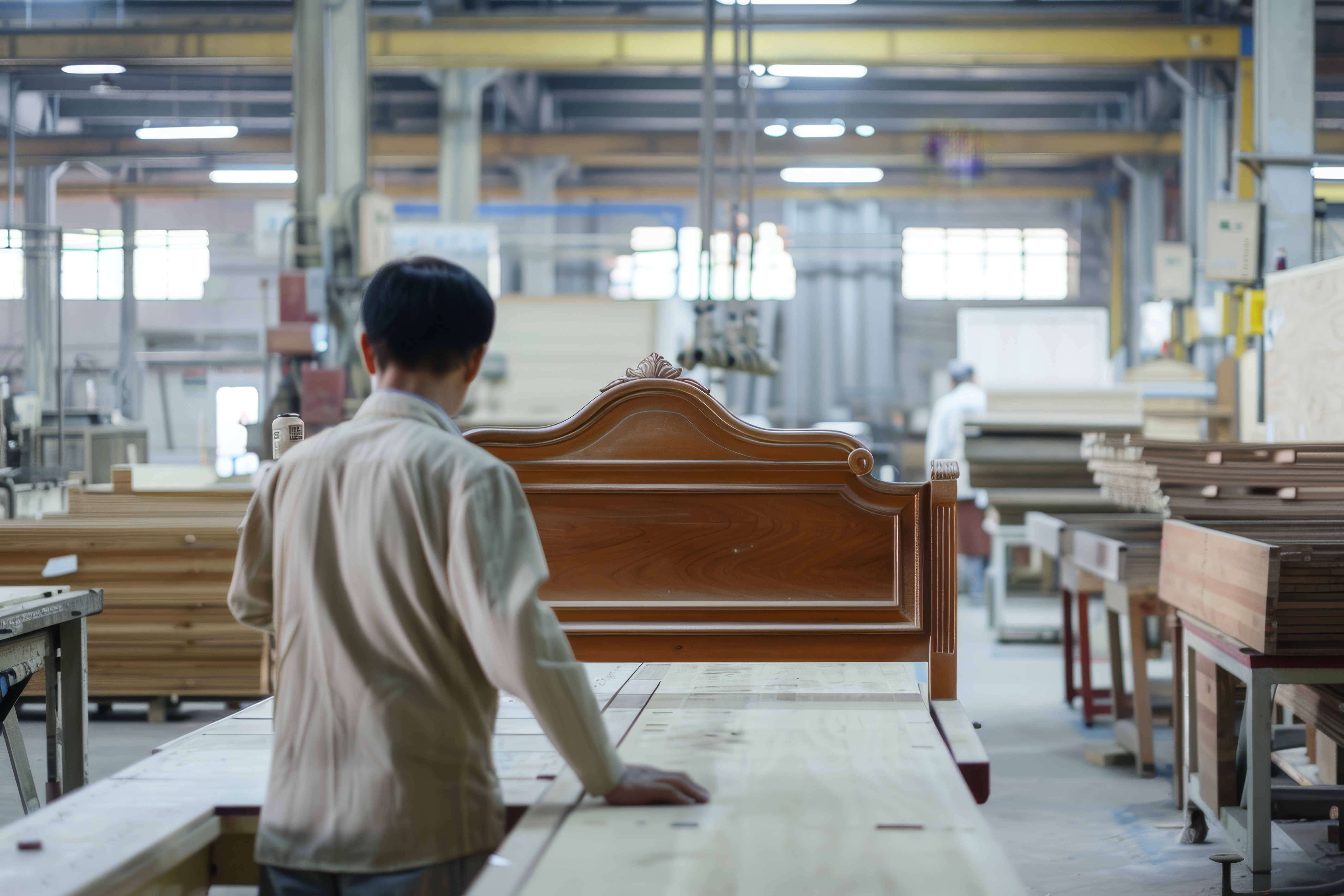
If furniture can be designed digitally, manufactured in China, flat-packed, shipped to Singapore and assembled locally, why should customised cabinetry permanently remain immune?
The technology, logistics and manufacturing capabilities already exist. The question is how quickly somebody puts the pieces together.

This isn't really about China
It would be easy to frame this as:
“China is coming to take Singapore's renovation business.”
I don't think that is the most useful interpretation. China is simply accelerating something that technology was already doing.
-
Removing friction.
-
Removing intermediaries.
-
Removing information asymmetry.
-
And removing margins that exist primarily because consumers previously didn't have alternatives.
The real threat isn't China. The real threat is irrelevance.
If your value exists because homeowners don't know where materials come from, the internet is a threat.
If your value exists because homeowners cannot contact manufacturers, platforms are a threat.
If your value exists because prices are difficult to compare, transparency is a threat.
However, if your value comes from expertise, creativity, problem-solving, project management, accountability and judgement?
Technology can actually make you more valuable.
Which brings us back to interior designers
Perhaps the interior design industry became too comfortable selling renovation. We bundled everything together.
-
Design.
-
Construction.
-
Procurement.
-
Project management.
-
Products.
-
Margins.
And called the entire package “interior design”.
Truth is, these components are slowly being pulled apart.
The homeowner can buy products. Platforms can provide quotations. AI can produce visualisations within seconds. Manufacturers can customise. Contractors can execute. And many digital marketplaces can connect buyers and sellers.
So what remains?
The designer.
The real designer who has the ability to understand how somebody lives and uses that empathy to plan space intelligently and identify problems before construction begins.
The real designer must possess the ability to reconcile aesthetics, ergonomics, materials, regulations, budgets and human behaviour.
The real designer must possess the ability to make hundreds of interconnected decisions and turn them into one coherent home.
That is much harder to commoditise or for AI to replicate. At least not so soon.
Which is why I don't believe the future is about protecting the old renovation model.
It is about rediscovering the value of design itself.
Maybe COVID didn't change the industry. It postponed the reckoning
Looking back, COVID may have created one of the greatest accidental stimulus packages Singapore's home improvement economy had ever experienced.
First, lockdown changed how much we valued our homes. Then construction delays constrained new housing supply. Then resale activity surged. Pent-up spending flowed through renovation, furniture and home improvement.
Each wave helped sustain the next, but extraordinary circumstances eventually end.
And when they do, industries discover what demand looks like without the tailwind.
That may be where Singapore's renovation trade is today.
-
The homeowner has changed.
-
Retail has changed.
-
Manufacturing has changed.
-
Technology has changed.
-
AI is changing design.
-
China is moving closer to the consumer.
Yet parts of our industry are still selling renovation much the same way they did twenty years ago.
So perhaps the question isn't whether the renovation market will recover. Perhaps we should ask a much more uncomfortable question:
Recover to what?
Because if we are waiting for the market of 2021 or 2022 to return, we may be waiting for economic conditions that were never normal in the first place.
COVID may have delayed the inevitable.
It may even have saved parts of Singapore's renovation trade for a few extraordinary years, but it didn't stop the transformation.
It just bought us time. The question now is what we choose to do with it.
Frequently Asked Questions About Singapore’s Renovation Industry After COVID
Did COVID increase renovation demand in Singapore?
COVID changed how Singaporeans used and valued their homes, while construction delays also affected the completion of new BTO flats. HDB resale transactions subsequently rose from 24,748 in 2020 to 31,017 in 2021, creating another source of renovation demand.
Why did HDB resale transactions increase after COVID?
Several factors influenced the resale market. During the pandemic, construction disruptions delayed new flats, while buyers who needed homes sooner could consider resale flats instead of waiting for BTO completion. HDB resale transactions increased by 25.3% from 2020 to 2021.
How is online shopping changing Singapore’s renovation industry?
Homeowners can increasingly research products, compare prices and purchase furniture, lighting, fittings and other home products themselves. This reduces the traditional advantage interior designers and retailers once had simply through access to products and suppliers.
Will AI replace interior designers?
AI can already assist with areas such as visualisation, but interior design also involves space planning, ergonomics, materials, regulations, budgets, human behaviour and interconnected decision-making. Astley's argument is that the future value of the designer lies increasingly in this expertise rather than simply access to products.


